Plug in Solar Panels in the UK What Are They and Can They Cut Your Energy Bills

A full rooftop solar system can feel like a big leap. It usually means scaffolding, surveys, several thousand pounds upfront, and a permanent change to the property. Plug-in solar panels promise something simpler: put a panel on a balcony, patio, shed roof, or garden frame, plug it in, and use some of your own solar power at home.
That idea has grown across parts of Europe, especially in flats and homes where standard rooftop solar is not practical. In the UK, the picture is more complicated. Plug-in solar can work in some situations, but it is not quite the same as plugging in a kettle.
This guide explains what plug-in solar panels are, how they work, what UK households need to check, and whether they can make a meaningful dent in energy bills.

What are plug-in solar panels?
Plug-in solar panels are small solar systems designed to feed electricity into a home circuit through a plug or dedicated connection. They are sometimes called balcony solar, mini solar kits, portable solar kits, or DIY solar panels.
A typical kit includes:
One or two solar panels
A microinverter that changes solar electricity into usable AC power
Mounting brackets or a frame
Cables and connectors
Sometimes a monitoring app or smart meter
Sometimes a battery or portable power station
The basic idea is simple. The solar panel produces DC electricity when light hits it. The microinverter converts that into AC electricity, the type used in UK homes. The electricity then offsets some of the power your appliances would otherwise draw from the grid.
If your home is using 300 watts and the solar panel is producing 200 watts, your home may draw only 100 watts from the grid at that moment. If the panel produces more than the home is using, the surplus could flow back towards the grid unless the system has controls or storage.
That last point is where UK rules matter.
How plug-in solar differs from normal rooftop solar
A standard rooftop solar PV system is usually fixed to the roof and wired into the property through a dedicated circuit. It normally includes a certified inverter, isolators, protective devices, and a process for notifying the local Distribution Network Operator, often shortened to DNO.
Plug-in systems are smaller and marketed as easier to install. The appeal is clear:
Plug-in solar
Rooftop solar
Lower power, often sold as a kit, may be portable or semi-permanent, usually aimed at renters, balcony users, and smaller homes.
Higher power, fixed installation, usually installed by professionals, better suited to whole-home savings and export payments.
The difference is not only size. It is also about safety and regulation. UK homes were not generally designed around the idea of small generators being plugged into ordinary socket circuits.
A normal socket is designed to supply electricity to appliances. Feeding electricity back through that socket can raise issues around circuit protection, isolation, labelling, earthing, and what happens during a power cut. A compliant inverter should shut down if the grid fails, a safety feature called anti-islanding, but the whole setup still needs to meet the relevant standards.
That does not mean every small solar kit is unsafe. It does mean the “just plug it in” message can be misleading in the UK.
Can you legally use plug-in solar panels in the UK?
Small solar generation is allowed in the UK, but it must comply with electrical safety rules and grid connection requirements.
For grid-connected generation, systems generally need to use approved hardware and meet requirements such as Engineering Recommendation G98 for small-scale generation. In many small domestic cases, the installer or homeowner notifies the DNO after installation rather than applying in advance, provided the system is within the permitted limits. Larger systems or multiple inverters may need permission before being connected.
The key point is this: being small does not remove the need for compliance.
Before buying a kit, check:
The inverter is suitable for the UK grid and complies with relevant standards.
The installation method is accepted by a qualified electrician.
The DNO notification process is understood.
Your consumer unit, circuit, RCD protection, and earthing are suitable.
Outdoor cables, plugs, and connectors are weatherproof and mechanically protected.
The system can isolate safely for maintenance or emergencies.
Your lease, tenancy agreement, freeholder, or building manager allows it.
Many UK electricians will be cautious about a system that feeds power into a standard 13 amp socket. Some products sold online may be designed for other European markets where the regulations, plug types, and accepted practices differ.
If a supplier cannot clearly explain UK compliance, treat that as a warning sign.

How much electricity can a plug-in solar panel produce?
A plug-in solar kit is usually much smaller than a rooftop system. A single modern panel might have a rated output of a few hundred watts under ideal test conditions. Real-world output changes through the day and across the year.
In the UK, production depends on:
Panel size and wattage
Direction, with south-facing usually best
Tilt angle
Shade from trees, walls, chimneys, railings, and neighbouring buildings
Season, with far more production in summer than winter
Local weather
Inverter efficiency
How much electricity the home is using while the panel is generating
The rating printed on a panel is not what it produces all day. A panel rated at 400 watts may reach close to that level only in strong sun, at a good angle, with little shade. On cloudy days, early mornings, late afternoons, and winter days, output can be much lower.
That said, even small amounts can be useful if they offset daytime background use. Many homes have appliances drawing power during the day, such as:
Fridge freezer
Broadband router
Smart speakers and standby loads
Ventilation systems
Laptop chargers
Washing machine or dishwasher cycles
Heat pump controls
Battery chargers
The best match is a household that uses electricity during daylight hours. If a home is empty all day and has low daytime use, more solar may spill back to the grid unless there is a battery or export arrangement.
Can plug-in solar panels cut your energy bills?
Yes, they can cut bills, but expectations need to be realistic.
A small plug-in system will not power a whole home. It may not run high-load appliances on its own either. A kettle, oven, electric shower, tumble dryer, or immersion heater uses far more power than one small panel can usually provide. What plug-in solar can do is trim the amount of grid electricity used during daylight hours.
Bill savings depend on three main factors.
How much electricity the system produces
More panel capacity usually means more generation, but only if the panels have enough sun and space. A shaded balcony might produce far less than the same panel on an open south-facing wall or shed roof.
How much of that electricity you use instantly
Self-consumption is the key to savings. If your panel generates power while your home is using it, you avoid buying that electricity from your supplier. If it exports unused power, the savings may be lower unless you receive export payments.
What you pay for electricity
The higher your unit rate, the more valuable each unit of self-used solar electricity becomes. Tariffs change, so any savings estimate should use current rates from your own bill.
Here is a simple way to think about it. If a small solar kit offsets electricity that would otherwise be bought from the grid, each self-used unit saves the import unit rate. If that same unit is exported and paid at a lower rate, the financial benefit may be smaller.
This content is for general information only. Energy costs, tariffs, grants, and regulations change, so check current details before making a purchase.
The main benefits of plug-in solar
Plug-in solar panels are attractive because they solve a few real problems.
They can be cheaper than rooftop solar
A small kit usually costs less than a full roof-mounted PV system. That makes it easier to test solar without committing to a large installation.
They can work where roof access is difficult
Flats, rented homes, shaded roofs, and listed properties can make standard solar hard or impossible. A balcony or garden panel may offer a partial option.
They are easier to remove
Some systems are portable or semi-permanent. That can help renters, although permission is still essential.
They help with daytime base load
If a home uses steady power during the day, even a modest panel can reduce grid demand.
They make energy use more visible
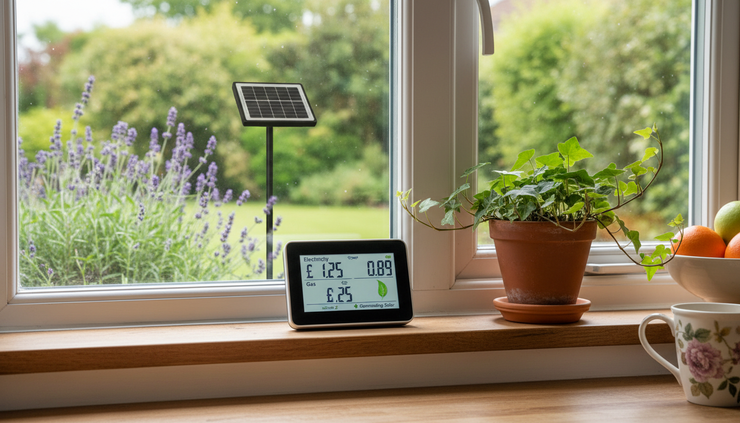
Many people become more aware of when they use electricity once they can see live generation. That can encourage simple habits, such as running appliances during brighter hours.
The downsides and risks to understand
The biggest risk is assuming that every product sold as “plug-in solar” is suitable for a UK home. It may not be.
Watch out for these issues.
Ordinary sockets may not be suitable
A plug-and-play kit that backfeeds a ring final circuit can raise safety concerns. A qualified electrician can advise whether a dedicated circuit, isolator, or different setup is needed.
Cheap inverters can be a problem
The inverter is the safety-critical part of the system. Poor-quality or non-compliant inverters may not shut down correctly during grid faults. They may also create electrical noise or fail early.
Export payments may not be available
The Smart Export Guarantee, usually called SEG, pays eligible households for exported electricity. Suppliers often require evidence that the system and installation meet certain standards. A DIY plug-in kit may not qualify, especially without MCS certification or accepted documentation.
Renters need permission
A balcony panel can affect the outside appearance of a building. It may also create concerns about wind loading, fixtures, fire safety, and shared electrical systems. Get written permission before installing anything.
Wind and weather are serious
A solar panel is a large flat object. If it is not secured properly, strong wind can turn it into a hazard. Outdoor cabling also needs protection from rain, UV damage, abrasion, and trip risks.
Plug-in solar, portable power stations, and batteries are not the same thing
Some products described as plug-in solar are really off-grid solar kits. They charge a portable battery, which then powers devices through sockets or USB ports. These systems are not normally connected to the home wiring.
That can be useful for:
Camping
Sheds and garden rooms
Emergency phone or laptop charging
Small outdoor appliances
Keeping a router running during short outages, if the equipment is suitable
Off-grid kits avoid some grid-connection issues because they do not feed electricity into the house circuit. The trade-off is that they usually power only what is plugged directly into the battery unit.
A battery can also improve self-consumption. If a panel makes power when the home does not need it, the battery stores it for later. But batteries add cost, take up space, and need careful safety handling. They are not automatically a better deal.
What to check before buying a plug-in solar kit
Before spending money, gather the practical details. A short checklist can save a lot of frustration.
Check where the panel will go and how much shade it gets through the day.
Confirm the mounting system can withstand UK wind and rain.
Ask the supplier for UK compliance documents, not just general claims.
Check whether the inverter is approved for use with the UK grid.
Speak to a qualified electrician about the connection method.
Check whether DNO notification or approval is needed.
Ask your energy supplier what evidence they need for export payments.
Confirm permission if you rent, own a leasehold flat, or live in a managed building.
Compare expected savings with the full cost, including fixings, electrician time, and any monitoring kit.
A good supplier should give clear answers. Vague phrases such as “works with any socket” or “no paperwork needed” should make you pause.

Who is plug-in solar best suited to?
Plug-in solar may suit households that want a small, cautious step into solar power and have a good sunny spot available. It is most likely to make sense when daytime electricity use is steady and the installation can be made safely and legally.
It may be a poor fit if the only available space is heavily shaded, if the building rules are strict, or if the goal is to make large cuts to electricity bills. In those cases, a standard rooftop system, a shared building solar project, energy efficiency upgrades, or a better tariff might be more useful.
For many UK homes, the best first move is still reducing waste. Draught-proofing, LED lighting, sensible heating controls, and shifting flexible appliance use to cheaper tariff periods can all help. Solar then becomes part of a wider plan rather than a single fix.
The takeaway
Plug-in solar panels can help cut energy bills in the UK, but they are not a magic socket-sized version of a full rooftop system. They work best as small daytime generators that reduce grid use while the sun is out.
The main questions are safety, compliance, permission, and realistic savings. If the kit uses approved equipment, suits your property, and is checked by a qualified electrician, it may be a useful way to generate some of your own electricity. If the seller cannot explain how it meets UK rules, walk away.
Start with your daytime energy use, your available sunlight, and your building constraints. Then decide whether a small plug-in system is the right tool, or whether your money would go further on a conventional solar installation or basic energy-saving improvements.


Comments